
Barn laid
Hens housed in barn-laid systems are not confined to cages, however they live in barren, windowless sheds where they are never given access to the outside. High stocking densities in these systems restrict hens' ability to move freely and exercise.
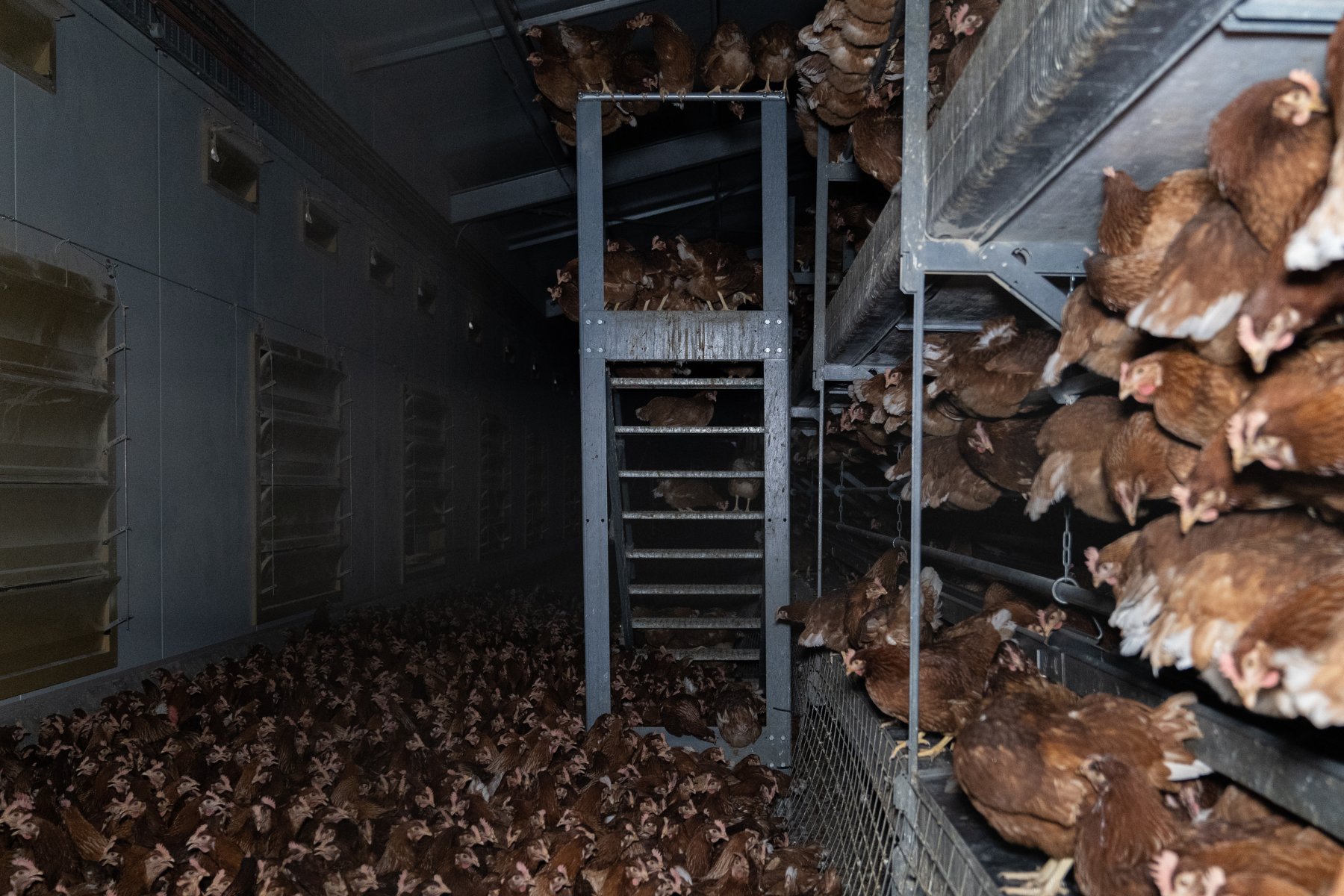
Chickens have complex social structures and form 'pecking orders' among their flock. However, when housed with thousands of other birds, it is impossible for hens to establish these pecking orders, leading to stress and aggression. Feather pecking, mortality and cannibalism are particularly problematic in cage free systems because of this.
Being confined indoors restricts hens' ability to perform the normal behaviours that provide quality of life. With very little space to move around freely, hens in barn-laid systems often suffer from weak and fractured bones.
There are no legal requirements or standards which apply to cage-free or 'barn-laid' egg production systems.
No Egg is Ethical
In 2025 Farm Transparency Project published an investigation into seven Victorian egg farms offering free-range and cage-free eggs. From small, local producers to major supermarket suppliers, they found the same suffering and misery in each shed they visited. The farms investigated included some of the biggest suppliers of free range eggs in the country, including Josh's Rainbow Eggs, Valley Park Farms and Farm Pride, a major supplier of Coles Brand Free Range.
At these farms, they found:
- Hens with missing feathers and open wounds due to feather pecking and fighting.
- Overcrowded sheds where hens were covered in faeces.
- So called 'free-range' farms where young birds are kept in small, crowded cages for up to three months.
- Bins filled with dead hens, carelessly discarded alongside rubbish.
- Soft, jelly-like eggs, a clear sign of vitamin and nutrient deficiency.