
Koalas
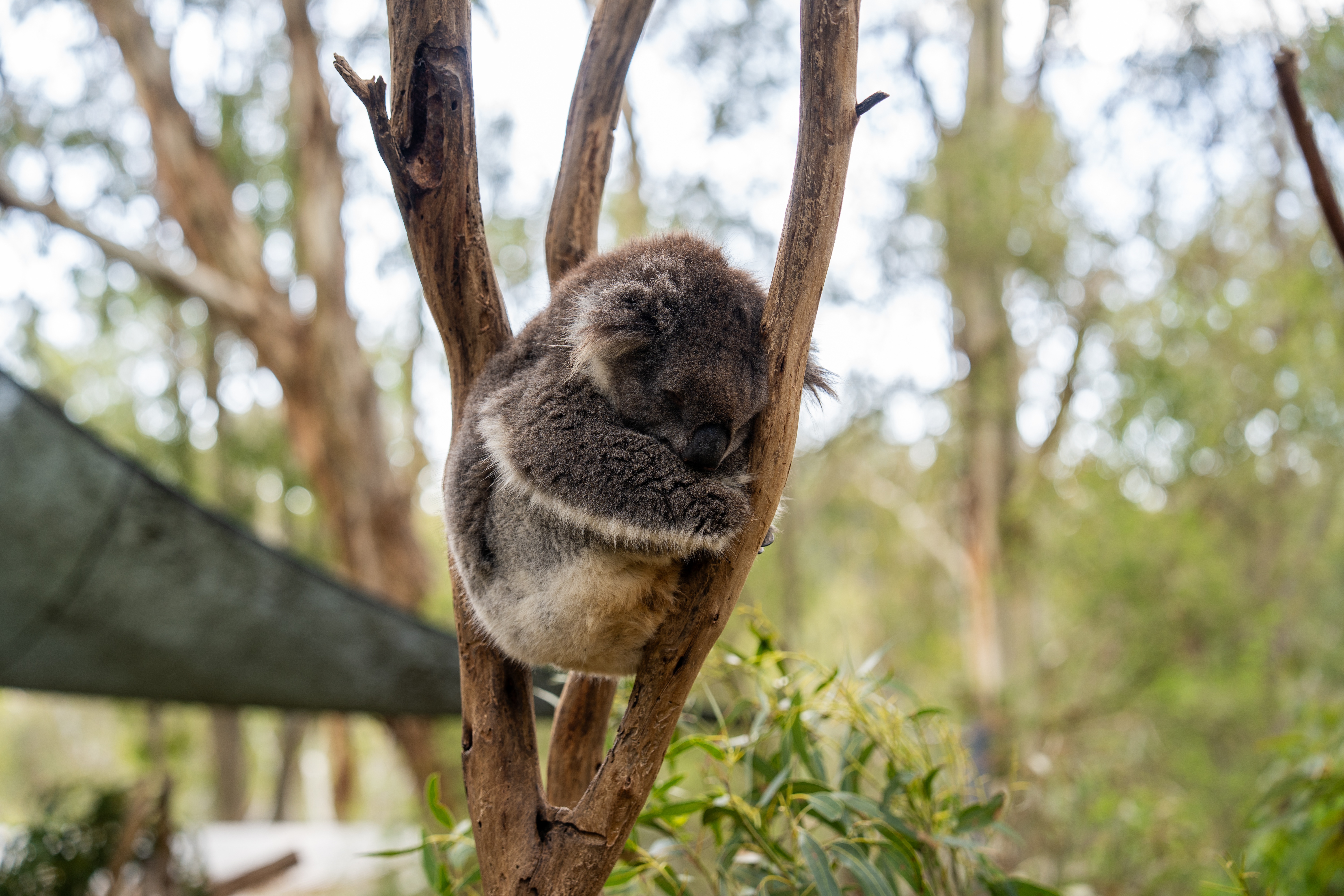
Koalas are a type of mammal called marsupials, which give birth to underdeveloped young. They are so different from any other marsupial, however, that they have been classified into their own family, called Phascolarctidae. They share a number of characteristics with wombats, who are their closest living relatives, including a backward-facing pouch (Source: Queensland Government).
Conservation status
In February 2022 the status of the koala has recently been changed from vulnerable to endangered. The change in status means an increased level of protection for koalas in Queensland, New South Wales and the Australian Capital Territory (Source: Queensland Government).
Diseases
Koalas are subject to a range of diseases which can affect their life expectancy. For example Chlamydia is a bacterial infection affecting many koalas in South East Queensland. The stress-related disease weakens the immune system and can cause blindness and reproductive tract disease which may render a female infertile. Koala infertility from Chlamydia infection is one contributing factor to the current decline in koala numbers (Source: Queensland Government).
The number of koalas infected with chlamydia varies widely between wild populations, from 0% to nearly 90% (Wildlife Health Australia, 2023). Research shows that about two-thirds of koalas that are infected but don't show symptoms will eventually develop signs of chlamydiosis within 4 years (Wildlife Health Australia, 2023).
Habitat Destruction
A 2014 study suggests koala tourism could now be worth as much as A$3.2 billion to the Australian economy and account for up to 30,000 jobs. Yet human destruction of their environment is pushing our beloved icons to extinction.
In 2025 more clearing of koala habitat was approved than in any other year since they were listed as a threatened species. Habitat loss is largely due to land clearing for the timber industry, agriculture and the construction of new extractive projects, such as coal mines.
Aerial culling
In April 2025, the Victorian government killed roughly 700 koalas by aerial culling. This was a supposed 'welfare response' after a fire in Budj Bim national park which caused significant damage to koalas habitat and food supplies. The culling was extremely controversial, leading to media coverage and backlash from the community and politicians.
Wildlife groups spoke out against the cull, saying that aerial assessment could not accurately be used to decide whether or not a koala needed to be euthanised. Criticism was also raised that the Victorian government undertook this action without consultion with wildlife groups or traditional owners of the land.