
Wild goats
Rangeland Goats
Wild goats were brought to Australia during early colonisation and wild herds are descended from these original goats, as well as others that have been brought over in subsequent years. Rangeland goats are considered a 'pest' animal in Australia, with wild herds estimated to cause $25 million worth of losses to farmers every year, due to grazing on land used for farming. Wild populations also damage ecosystems and compete with native animals for food and habitats. Due to their extreme hardiness and wide diet, they are able to survive and flourish in conditions which may devastate native species.
Despite the consistent demonisation of these native populations, the capture and slaughter of wild goats has become a $235m dollar export market, with Australia becoming the #1 global exporter of goat meat.The amount of goat meat exported from Australia doubled in 2023, with 33,891 tonnes being shipped overseas, primarily to the United States, China and South Korea.
Rangeland goats live all over the country, but the majority of herds are found in NSW. In this state, as well as in QLD, and South Australia, large muster stations, known as goat depots, allow musterers to capture goats and ship them directly to slaughter, without having to ear tag them in accordance with the National Livestock Identification System (NLIS). This exemption means that pastoralists can make significant amounts of money selling wild goats to slaughterhouses, without having to invest in the labour and equipment that would be involved in tagging all of these goats, or the land and infrastructure which would be involved in farming them.
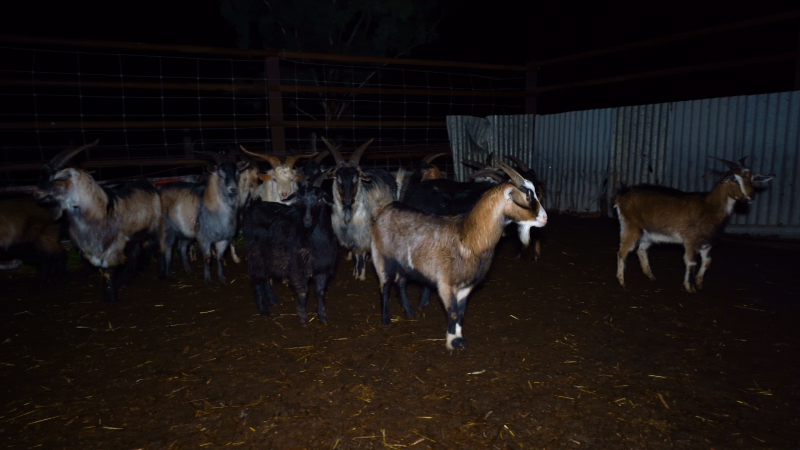
The fact that rangeland goats are a significant source of income for many rural farmers, means that alternative, non-lethal population management measures are significantly disincentivised. Additionally, the categorisation of wild populations as 'pests' serves the meat and livestock industry well, as it justifies the increasing profit they are making from this often unregulated slaughter.
As wild goats are seen as damaging pests, their capture, transport and killing often falls into something of a legislative blindspot. This is never more apparent than when it comes to the abandonment and slaughter of newborn goats. Many wild goats are pregnant when they are captured, meaning that it is common for newborn kids to be born during transport or in the holding pens at the slaughterhouse. While this happens occasionally with farmed animals (and sometimes intentionally in the case of unborn calves), the nature of wild mustering means that it is far more common for pregnant animals to be sent to slaughter.
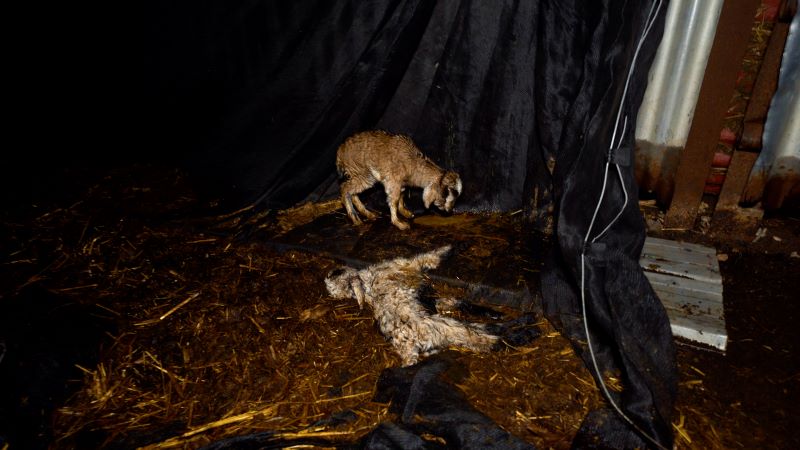
In June, 2023, the Farm Transparency Project team investigated Menzel's Meats and Snowtown Slaughterhouse in South Australia. Alongside cows, sheep and, in the case of Menzel's, pigs, both facilities slaughter hundreds of goats every week. These goats were not the short-haired, short-horned farmed goats that are commonly depicted as part of a typical 'farm' scene. They were scruffy and bedraggled, with long, multi-coloured hair and intricately curved, wickedly sharp horns. They were flighty, fearful and unquestionably wild.
The footage we captured at these two facilities was to be the first video of the slaughter of wild, rangeland goats which we would document throughout 2023 and 2024, during our investigations of 30 Australian slaughterhouses. Ultimately, we would go on to install hidden cameras inside thirteen facilities which killed these animals, capturing some of the most harrowing and brutal footage of all the 30. Often, we would go into an investigation intending to focus on another species and realising only during the course of installing cameras that hundreds or thousands of the animals being killed were these wild goats, who stood out to us not only because of the frequent violence of their deaths, but because of their fierce determination to resist and fight back against efforts to restrain, cage and ultimately end their lives.
During the course of our investigations into Australian slaughterhouses, we documented the handling and killing of these infant animals. Many of them are killed with a bolt gun, which is a legal method of slaughter for farmed animals (including newborn calves and goats) within 24 hours of birth. In welfare standards developed by the Queensland government, it is specified that blunt force trauma must be immediately followed by bleeding out in order to ensure death.
In early 2024, we captured footage of the slaughter of newborn goats at two Victorian slaughterhouses. The first, the Game Meats Company, used a large, pronged, electric stunner to kill newborn goats. Kids would be removed from the holding pens and placed in a plastic bucket for several hours. They would then be electrocuted, often multiple times, in order to cause unconsciousness and death. Afterwards, their throats would be slit. Our footage showed that newborn goats could often be seen continuing to struggle after electroduction and even after their throats had been slit.
At Cedar Meats, one of Victoria's largest export slaughterhouses, newborn goats were shot with a bolt gun and left to die. Footage showed that on at least two occasions across a two week period, these kids continued to sit up, cry out and attempt to stand for up to 7 hours after having been shot in the head. One goat was captured giving birth while in the stunning restraint. Her throat was slit moments after her baby was born. That baby was taken to a pen and left for nine hours before being shot and killed.
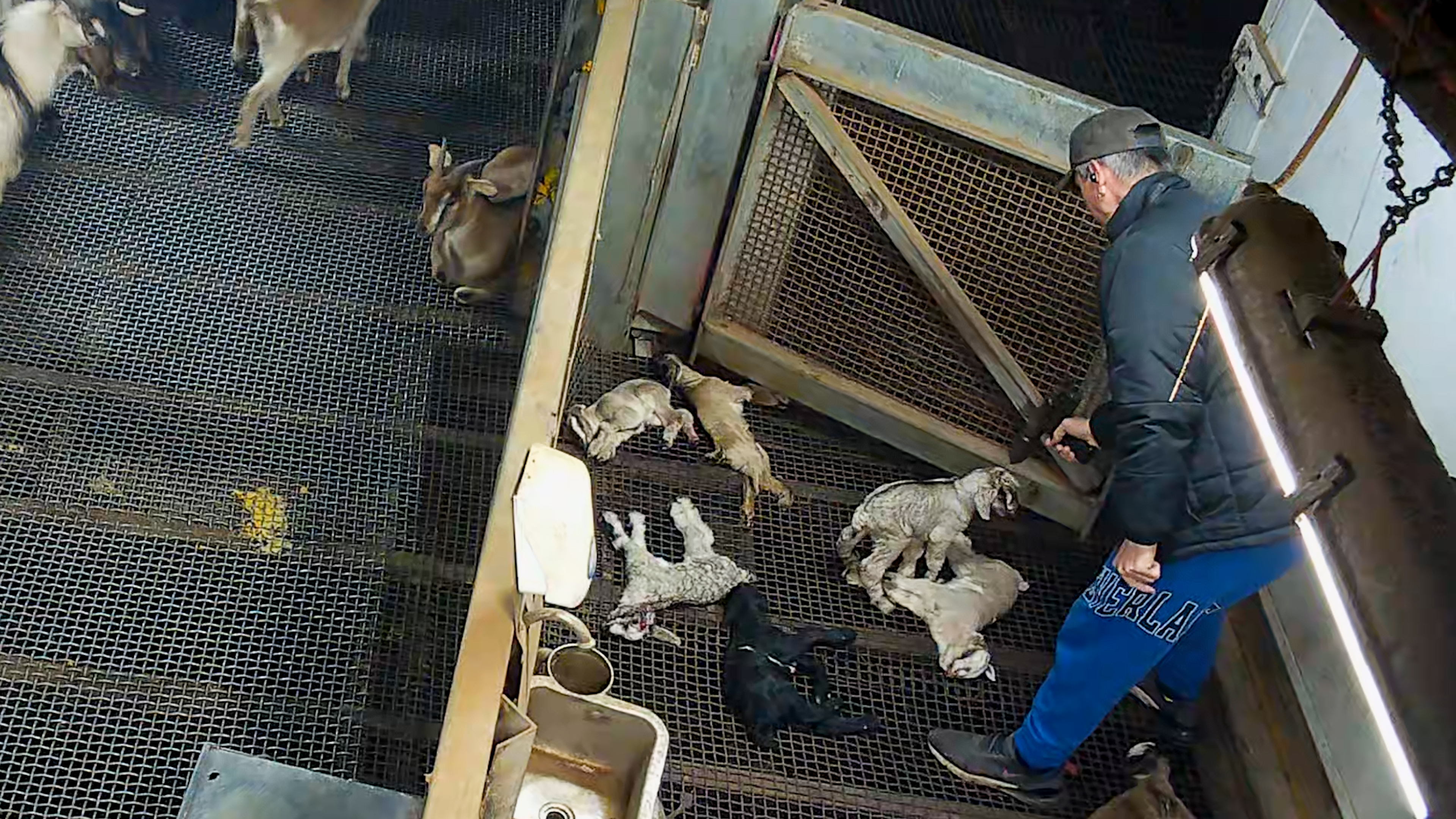
Sanctuaries, including Farm Animal Rescue in Queensland, tell stories of newborn goats being left behind at goat depots, after their mothers have been rounded up and transported to the slaughterhouse. These newborns often starve slowly over the course of days. During the course of our investigations we have also found kids in the holding pens at slaughterhouses, including Snowtown in South Australia, where we rescued a newborn goat who we named Bear. Sadly, Bear, like the majority of these babies, did not make it.
The brutal, often drawn out, deaths of these infant goats demonstrates the carelessness shown to wild born animals, who are on one hand seen as pests and on the other seen as valuable products. While the export market for goat meat is large and growing, governments in Australia are attempting to capitalise further on the slaughter of rangeland goats, investing in research and marketing to increase domestic sales.