
Wild buffalo
Water Buffalo
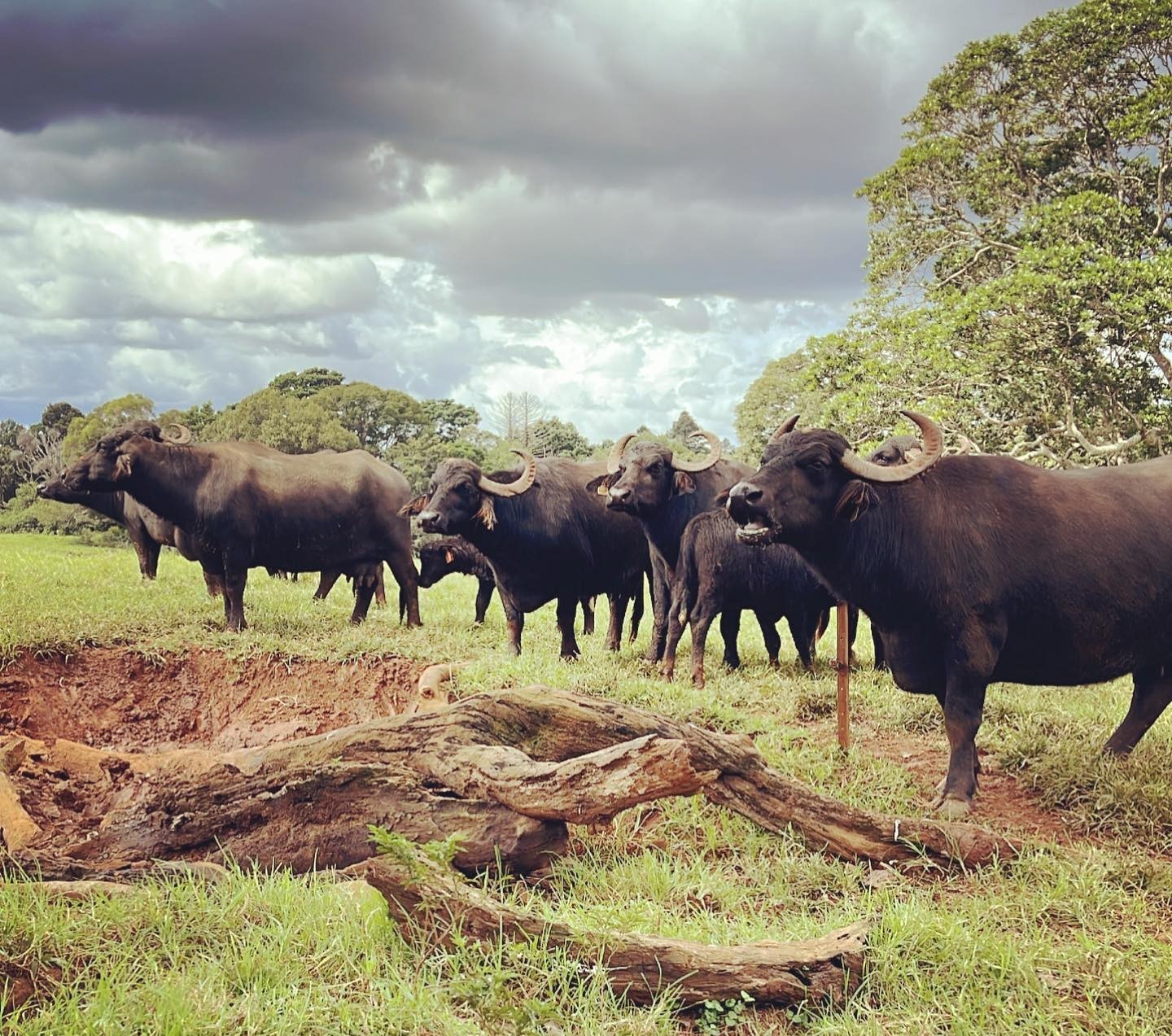
In the 19th century, a small number of water buffalo were brought to Australia as part of an experimental project to provide meat to remote settlements in the Northern Territory. By 1949, these settlements and the buffalo were abandoned, leading to the spread of wild herds across the top end of the Northern Territory which, with its swamps and floodplains offered the perfect environment for the swamp and river dwelling animals.
In the decades that followed, wild buffalo became the focus of targeted eradication campaigns due to their impact on the environment and the potential for them to spread disease to herds of domestic cattle. The largest of these campaigns was the Brucellosis and Tuberculosis Eradication Campaign which used aerial shooting to slaughter wild buffalo en masse. The campaign lasted from 1979 - 1997, killing almost 20,000 buffalo living in Kakadu national park and the northern wetlands in this time.
At the same time as wild buffalo were being clinically and systematically slaughtered however, they were also being captured, killed and sold for multiple purposes including meat for human consumption, pet meat, skin, horns, live export and game for hunters. While remaining small, the buffalo industry has stayed steady over the years, with farmers mustering wild buffalo, or breeding domestic herds for meat and dairy. These industries are seen by some as making use of a 'wasted resource,' who would otherwise be culled. Like with goats and camels, the existence of buffalo is seen as a problem with only two possible solutions: to cull or to kill, with the question of who can profit from the death of a buffalo providing the key point of difference.
Like with other 'invasive' species, non lethal control measures such as sterilisation and relocation are rarely discussed, and conversations about the need for eradication will often be tempered by arguments to expand industries that depend on these wild herds. These animals are caught in the middle, on one hand a dangerous ecological nightmare and on the other a potential pot of gold allowing producers to make money off animals without having to invest in the infrastructure involved in farming domestic herds.
%20-%20Knockbox%20tipout.00_03_59_03.Still001.jpg)
What is usually missing from these discussions is consideration for the buffalo her/himself. Considered to be naturally docile and easy to domesticate, buffalo are thought to have long memories, particularly for pain and trauma. Their thick skins and large size mean that they have a reputation for being able to "withstand rougher handling than cattle," but they are also known to be stubborn and to resist mustering and herding in the wild and at the slaughterhouse. Like all introduced species, buffalo were not brought here by choice. They were taken from their homes and transported to a foreign country to be bred and killed for meat and then they were abandoned before being labelled as a dangerous threat to our environment. Their crime is survival and for that they have been sentenced to death.