
Wild camels

Summerland Camels, 2017 (Farm Transparency Project)
Although commonly associated with countries such as Saudi Arabia and Egypt, Australia is believed to have the largest population of wild camels in the world. These camels are descended from the 10,000 and 20,000 camels who were transported to Australia from India between 1840-1907, largely to be used for labour and transport. In the 1920s, many of these camels were released into the wild as animal labour became less common. Camels now live in most desert areas across Australia, with a 2010 report stating that herds could be found in "50 per cent of Australia's rangelands ecosystems," including desert areas in Western Australia, South Australia, the Northern Territory Queensland.
While the Northern Territory Government put the number of wild camels at over 1 million, the South Australian Department of Primary Industries cites the much lower number of 300,000. This is indicative of the lack of accurate recording of wild, non-native animals, which advocates argue has led to 'management decisions' made on incorrect or misleading information.
Despite being slow to breed and largely living in arid areas which are scarcely populated by humans or other species, camels are classified as a pest by the Australian government, who cite threat of disease transmission to livestock and increased grazing pressure as reasons to justify their capture and slaughter. Common methods used to reduce camel herds are shooting, aerial culling, trapping at water sources and rounding up camels for capture and use in other industries.
Like with goats, camels can be mustered at stations and transported to the slaughterhouse. This is seen as an alternative to culling by some farmers, who have begun to sell wild camels alongside 'beef' cows bred on their property. Some farmers also go a step further, feedlotting wild camels before selling them on to maximise profit. Although it is expanding, the camel slaughter industry currently remains small. In 2020, it was estimated that around 5,000 wild camels were being killed for human consumption per year, with meat being sold domestically and exported.
Slaughterhouses including Peterborough Abattoir in South Australia and Wamboden abattoir in the Northern Territory specialise in the slaughter of camels, while others such as Brisbane Valley Meats slaughterhouse kill them alongside other species, including rangeland goats.
As well as being slaughtered for meat domestically, camels are live exported each year for breeding, meat, dairy and tourism. A report prepared by Meat and Livestock Australia (MLA) in 2014 estimated that economic, social and environmental benefits from the live export of camels would be minimal, stating that "modest economic returns and substantial risks limit the attractiveness of investment in Australian live camel exports." Despite this assessment and these risks, which included concerns regarding animal welfare, the live export of camels has continued with companies specialising in the capture and export of these wild animals.
As well as their meat, wild camels are also captured for the dairy and tourism industry. Although still a small industry, camel dairies have been slowly growing in popularity over the past decade. Between 2014 and today, the number of camel dairies in the country went from one to ten and camel products such as milk and cheese have become more common as speciality items. Camel dairies will often capture and train wild camels as breeding and milking stock, making use of wild herds to grow their business. While camel milk can be sold for high prices, they produce far less milk and breed far slower than dairy cows, meaning that commercial camel dairies may turn to other revenue streams in addition to selling camel products.
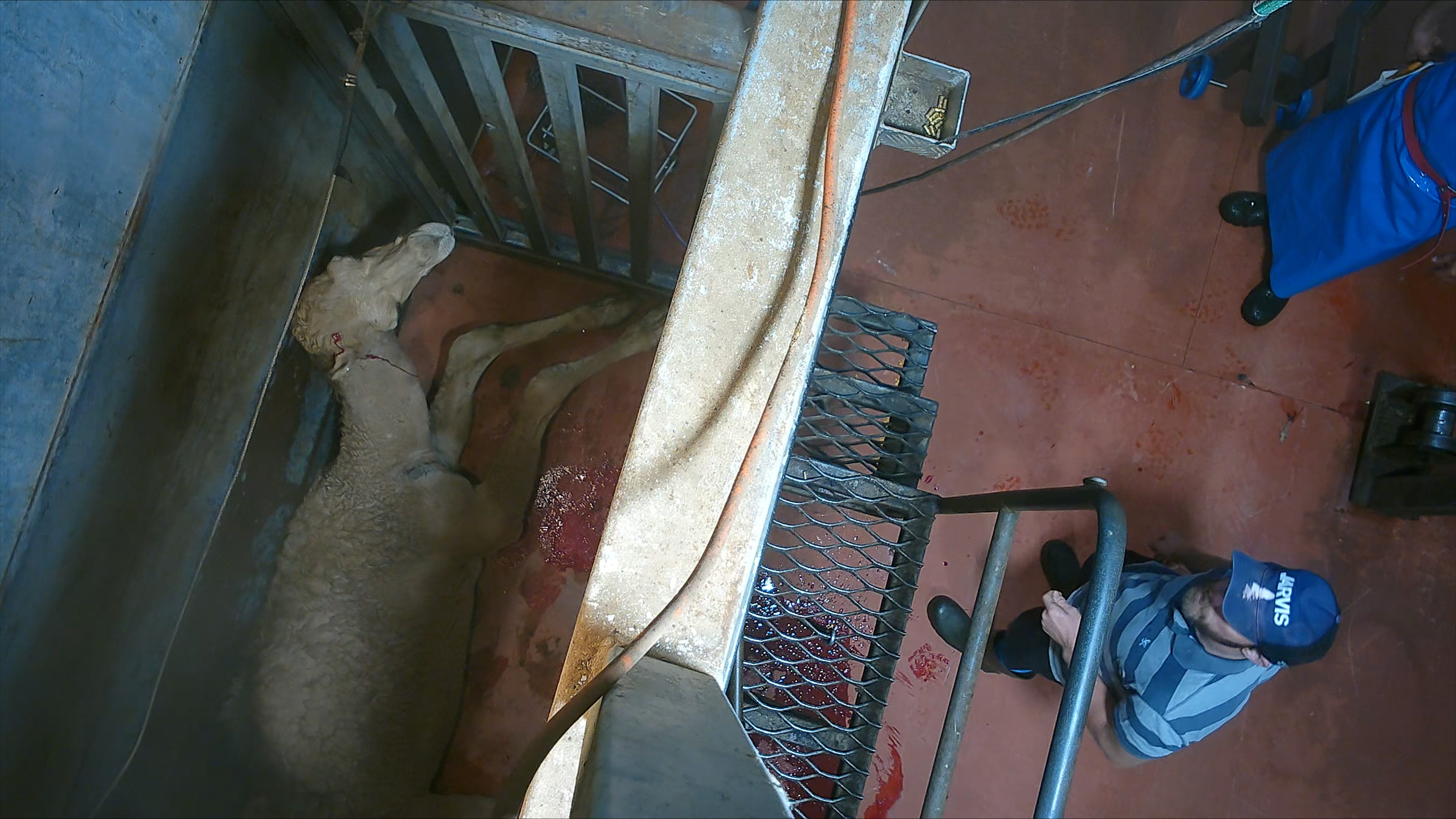
Australia's largest camel dairy and farm, Summerland Camels offers tours, camel rides and a cafe, in addition to selling camel products including milk, cheese, skincare and even camel milk vodka. Just like dairy cows, when camels reach an age where their milk production begins to slow, they are sent to slaughter. For Summerland dairy, this slaughter likely takes place at Brisbane Valley Meats Slaughterhouse in the nearby town of Esk, where in 2024 Farm Transparency Project captured footage of the killing of camels.
Wild camels are also used for tourism across Australia but particularly in the Northern Territory and Queensland where camel rides, tours and races are popular forms of entertainment for tourists and locals alike. In 2024 Animal Liberation released an investigation showing the treatment of camels at Uluru Camel Tours in the Northern Territory. Footage captured by the group, as well as reports by whistleblowers, showed that camels captured from the wild were routinely and systemically roughly handled, subjected to physical and psychological distress, had surgery and mutilations (including castration and 'nose pegging') performed on them without anaesthetic or pain relief and were frequently worked to the point of exhaustion and even death.
Camels' status as invasive 'pests' means that individuals, companies and industries which profit from their bodies, products and labour face minimal regulation and oversight. The lives of these camels are considered by many to be forfeit because they were brought to this country against their will, because they don't belong here and because they had the audacity to manage to survive. Whether they are being shot from helicopters and left to rot or forced to carry tourists on their back day after day, past the point of exhaustion, the exploitation of camels can always be justified as finding innovative uses for a 'feral resource,' whose presence is unwanted and whose life is up for grabs.