Zoos in Australia and around the world are seen as important and necessary institutions, providing entertainment, education and conservation of threatened animals who are unable to live in the wild.
But how much of that is true?
Captivity is not conservation
While zoos will often talk about the 'critical role' they play in the conservation of threatened and endangered species, the reality is most animals in zoos are not on the endangered species list. Those that are, will never be returned to their natural habitat and will spend their entire life in captivity.
At private zoos such as Gorge Wildlife Park in South Australia and Darling Downs Zoo in QLD, investigators documented the captive breeding of rabbits, guinea pigs, capybaras, several species of birds and wallabies; animals who are far from endangered. Baby animals are often bred unnecessarily to draw in customers, even when there isn't room for them. These 'surplus' animals will be shipped to other zoos or, in many cases, killed.
For those that are endangered or critically threatened, most will be born in captivity and forced to live their whole life as objects for entertainment. Despite being healthy and uninjured, they will spend their entire lives in a glass box being viewed by visitors with little opportunity to express their natural behaviours.
Most zoos exist primarily for profit. In 2004, a former zoo director estimated that less than 3% of a zoo's budget goes towards conservation. More recently in 2019, Taronga Zoo told the Guardian that 11.5% of its budget was spent on conservation work, while Zoos SA spent just 6%.
Captivity is not education
Animals do not belong in cages and seeing them this way offers little insight into their actual behaviour, as keeping animals in captivity changes their brain structure.
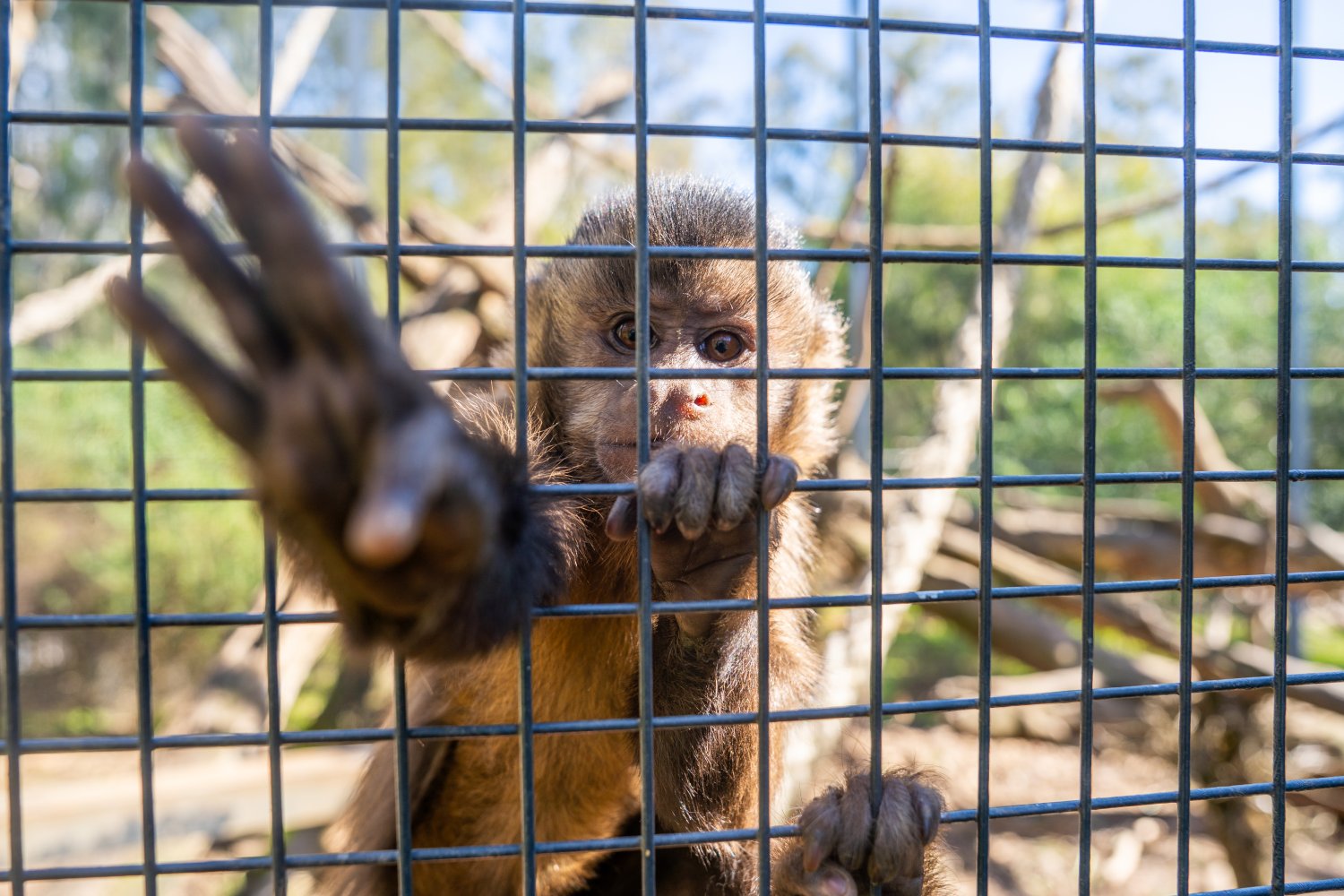
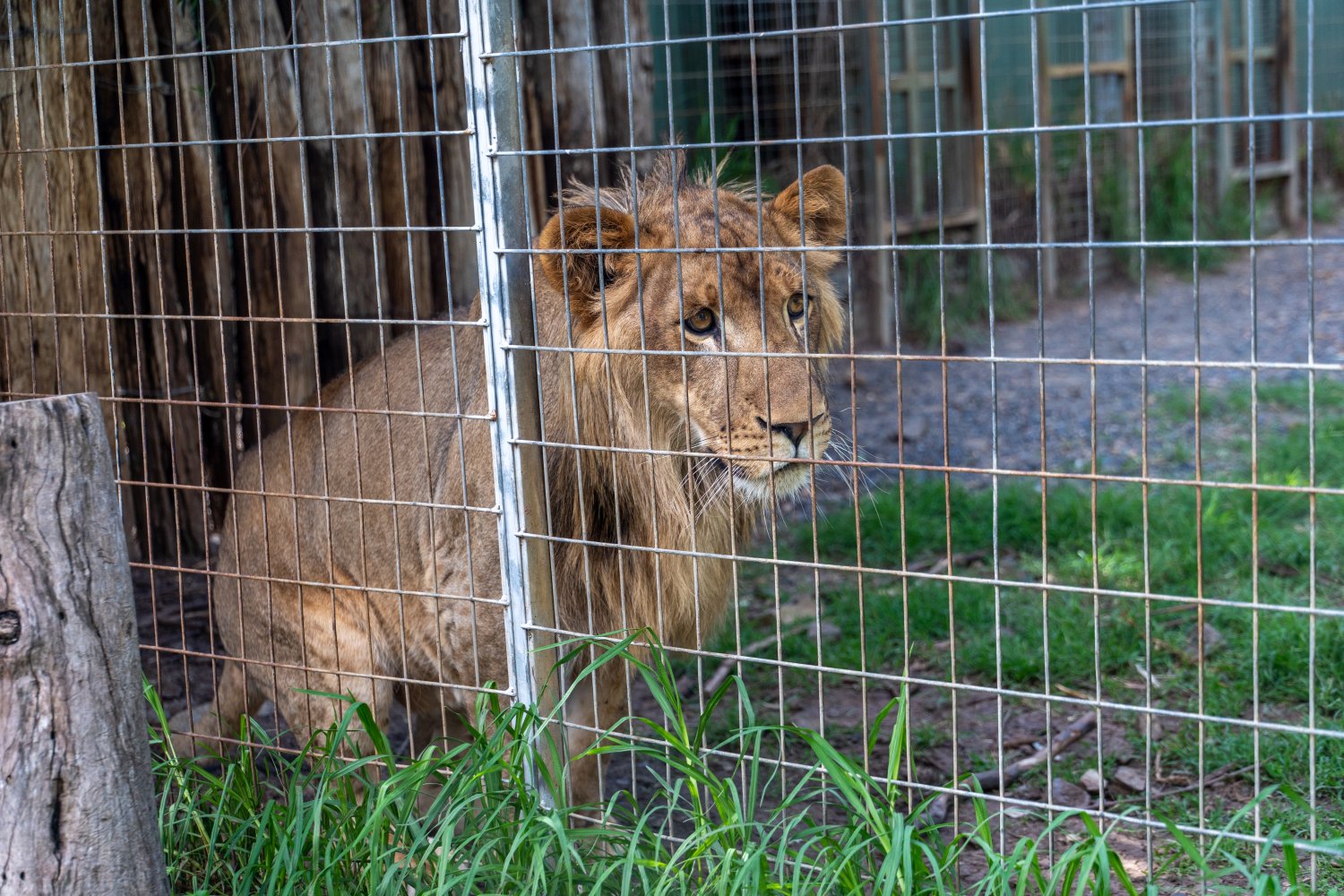
At Adelaide Zoo, investigators filmed as a Sumatran Tiger paced along the boundaries of his enclosure, before lunging at someone who filmed through the glass. Nearby, a mother giraffe stood next to her baby, both eating hay from a bag in a small, featureless enclosure. Similarly, tigers, leopards and lions paced back and forth at Melbourne Zoo and Darling Downs Zoo, creating deep furrows in the dirt of their cages. At Gorge Wildlife Park, a capuchin monkey gripped an investigator's hand through the bars of their enclosure, while monkeys at Darling Downs were seen reaching sticks out through their bars to play with leaves.
At the privately operated Darling Downs Zoo, enclosures are often small and contain little enrichment. Large, brightly coloured macaws and native birds are kept in cages barely large enough to fly in, and penguins swim laps in a small, concrete pool. Tigers, lions, leopards and cheetahs pace up and down in small pens, and alligators lie in dirty pools, barely long enough for their bodies.
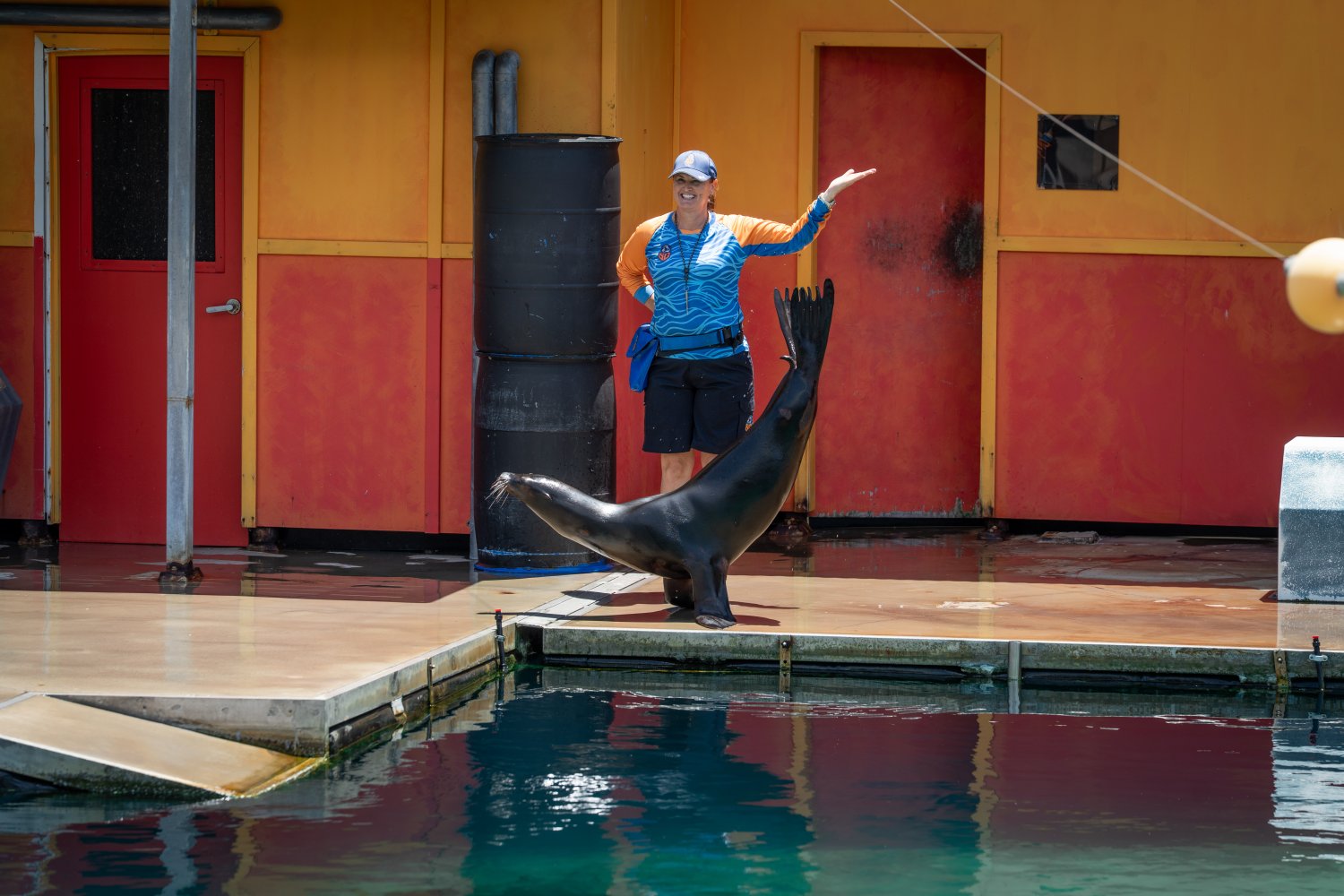
Sea World on the Gold Coast is home to 15-30 captive bottlenose dolphins who swim circles in shallow bays. Dolphins and seals are trained to perform tricks and dance for audiences, while three polar bears are on display in a rocky enclosure. Naturally, polar bears' ideal habitat is sea ice where air temperatures range from -40°C to 0, and they can start to overheat beyond 10°C. The Gold Coast has a subtropical climate where temperatures can reach up to 40°C with up to 75% humidity. When investigators visited, just one of the bears was visible. Although their website states that the polar bears "have the choice to come and go from the exhibit as much as they like," this bear was seen restlessly pacing back and forth between the doors into the back of the enclosure, occasionally crying out in frustration. All doors remained closed.
Animals in zoos are forced to spend day after day in the same environment, often in isolation and surrounded by humans and unfamiliar animals. Zoos will often offer 'experiences' such as koala cuddling or feeding opportunities, putting animals in close contact with the public. Despite this close contact being strongly discouraged by experts, every zoo we visited offered the public the chance to directly interact with the animals.
Animals have also been known to attack humans who attempt to interact with them. In July 2025, a woman lost her arm after being mauled by a lion at Darling Downs Zoo in Queensland. A year earlier, in September 2024, a trainer was hospitalised after being bitten by a tiger at Dreamworld. When investigators visited Darling Downs in 2025, they filmed as a captive lion stalked a passerby, before returning to sit by his friends who were trapped in a small room.
Captivity is not cute