Behind the Bars: Why Working as a Zookeeper Convinced Me that Captivity is Incurable
 Farm Transparency Project (FTP)
Written by A former UK Zookeeper
When I first accepted a position as a zookeeper at a prominent UK Zoo, I did so out of a profound love for animals. Like many people, I believed the narrative that modern zoos were sanctuaries of conservation, education, and care. But over the course of my six-year tenure, that illusion completely shattered. Being on the inside allows you to see past the carefully curated public exhibits and witness the chronic physical and psychological toll that confinement takes on these beautiful, complex beings.
The public sees a snapshot of an animal's day; keepers see the reality of their lives. It didn't take long for me to notice the systemic, textbook signs of "zoochosis"-the repetitive, functionless coping mechanisms born entirely of chronic stress.
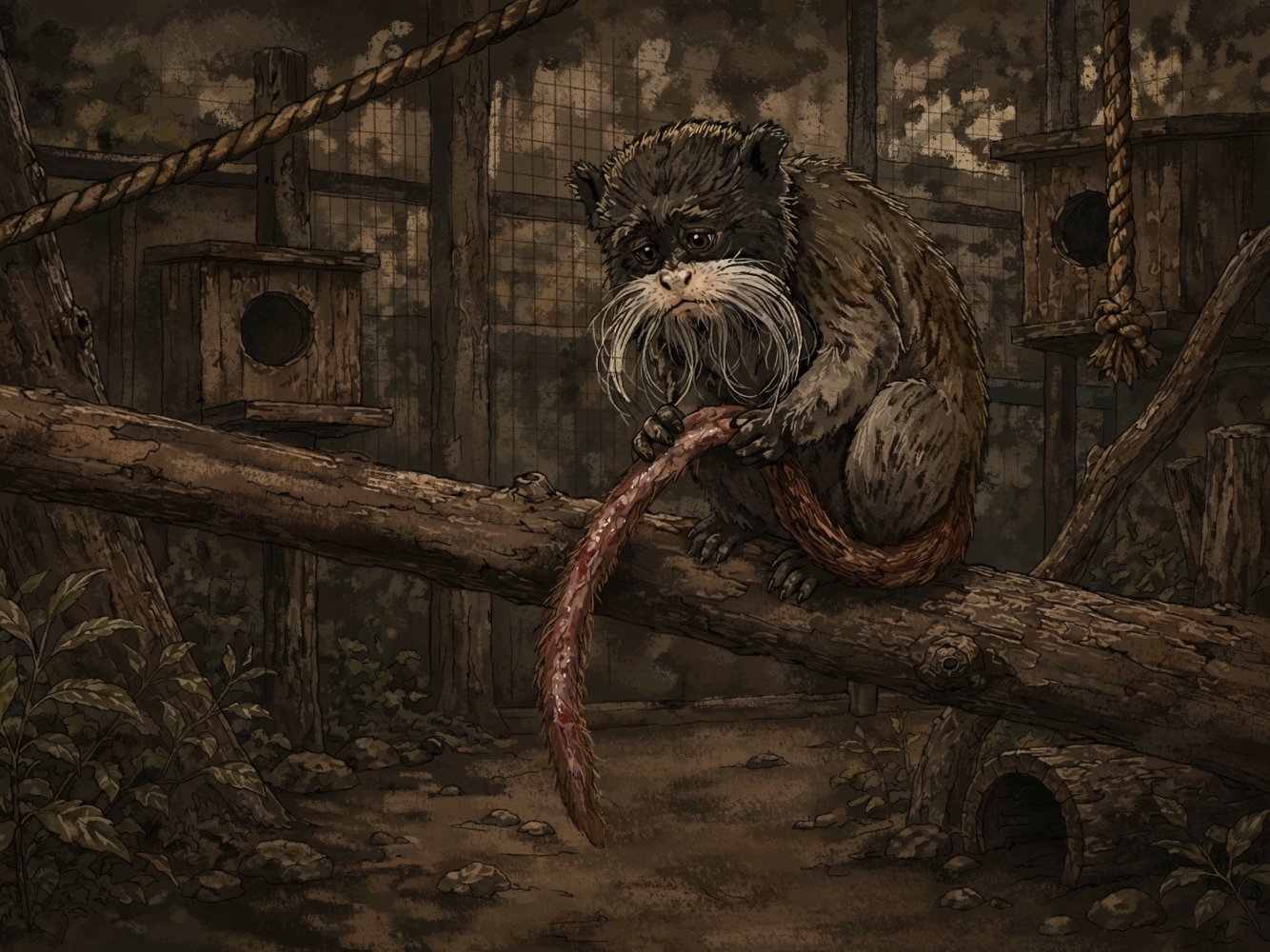
I watched large carnivores endlessly pacing the perimeters of their enclosures. I watched giraffes and okapis repeatedly licking metal poles and wooden branches-an oral stereotypic behavior stemming from the frustration of being unable to forage naturally. I watched small tamarins and marmosets frantically over-grooming their tails due to high anxiety. In the wild, these primates have lush, clean coats; in the zoo, the constant stress left them with greasy fur and thin, rat-like tails. Visitors look at these animals and assume that is simply how they are supposed to look, completely unaware they are witnessing a physical manifestation of psychological distress.
The fundamental flaw of the modern zoo is the arrogant belief that we can duplicate an animal's wild world within a commercial, consumer-driven space. We can't.
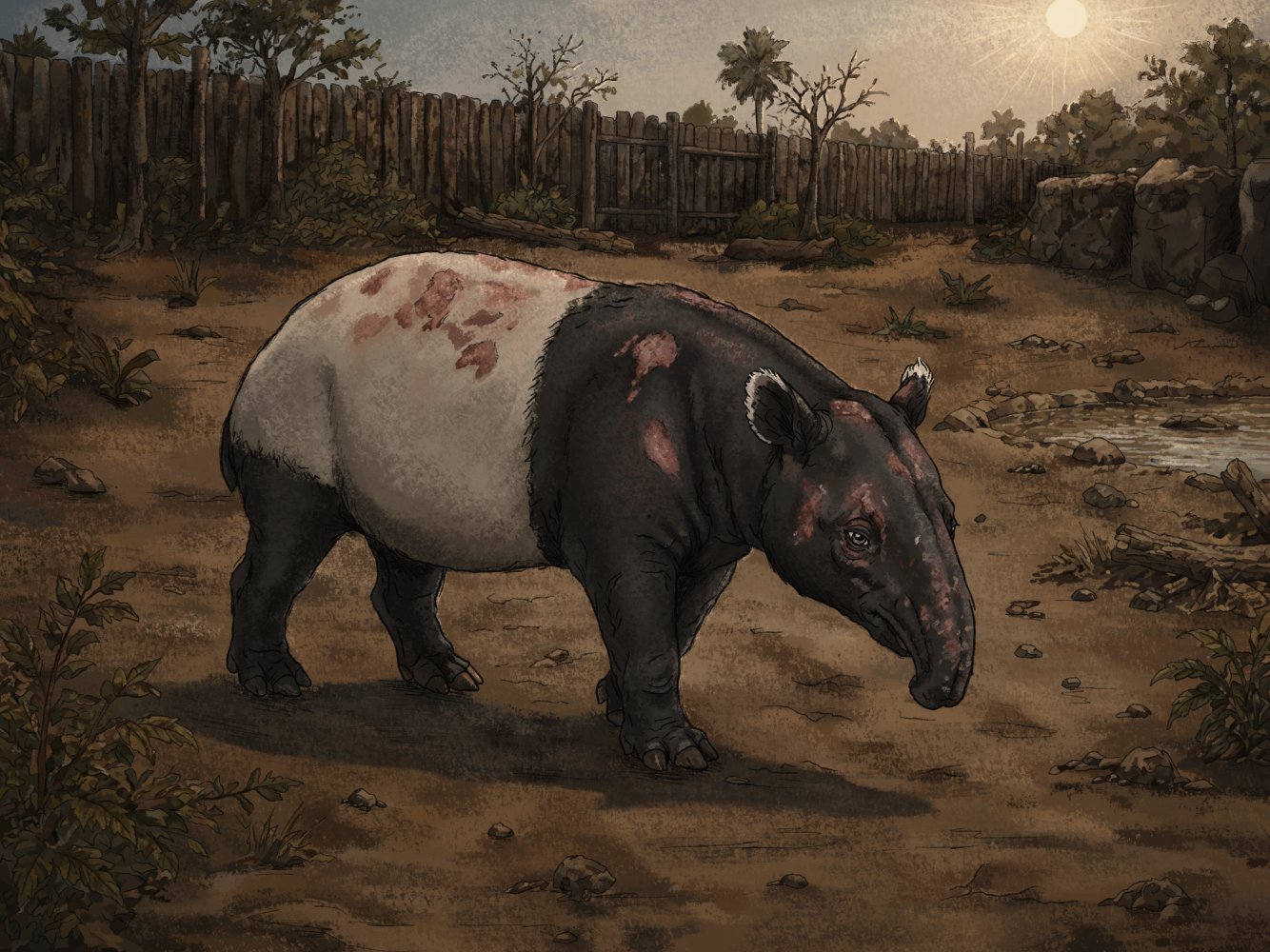
I worked with Malayan tapirs, who are biologically wired for the deep, dense shade of tropical rainforests. At the zoo, they were placed in a wide-open, minimally shaded enclosure so that visitors could get a good gawk at them. In the UK, away from the natural humidity of their homeland, hot sunny days left these sensitive animals with massive, painful pink sunburn marks. Their biological needs were entirely sacrificed for visitor visibility.
Similarly, I worked with giant anteaters whose natural diets consist of highly specific South American ants and termites. Because it is impossible to import these insects in the quantities required, they are fed a synthetic slop. Deprived of their natural nutrients, anteaters in zoos worldwide suffer from terrible, chronic skin issues. Every single day, my colleague and I had to bathe these giant anteaters with medicated shampoo. Because they possess massive claws capable of disemboweling a human, my colleague had to stand in front of me with a riot shield just so we could safely manage the daily, unnatural routine required to treat a condition caused entirely by their captivity.
But beyond the daily erosion of their well-being, confinement creates environments ripe for tragedy.
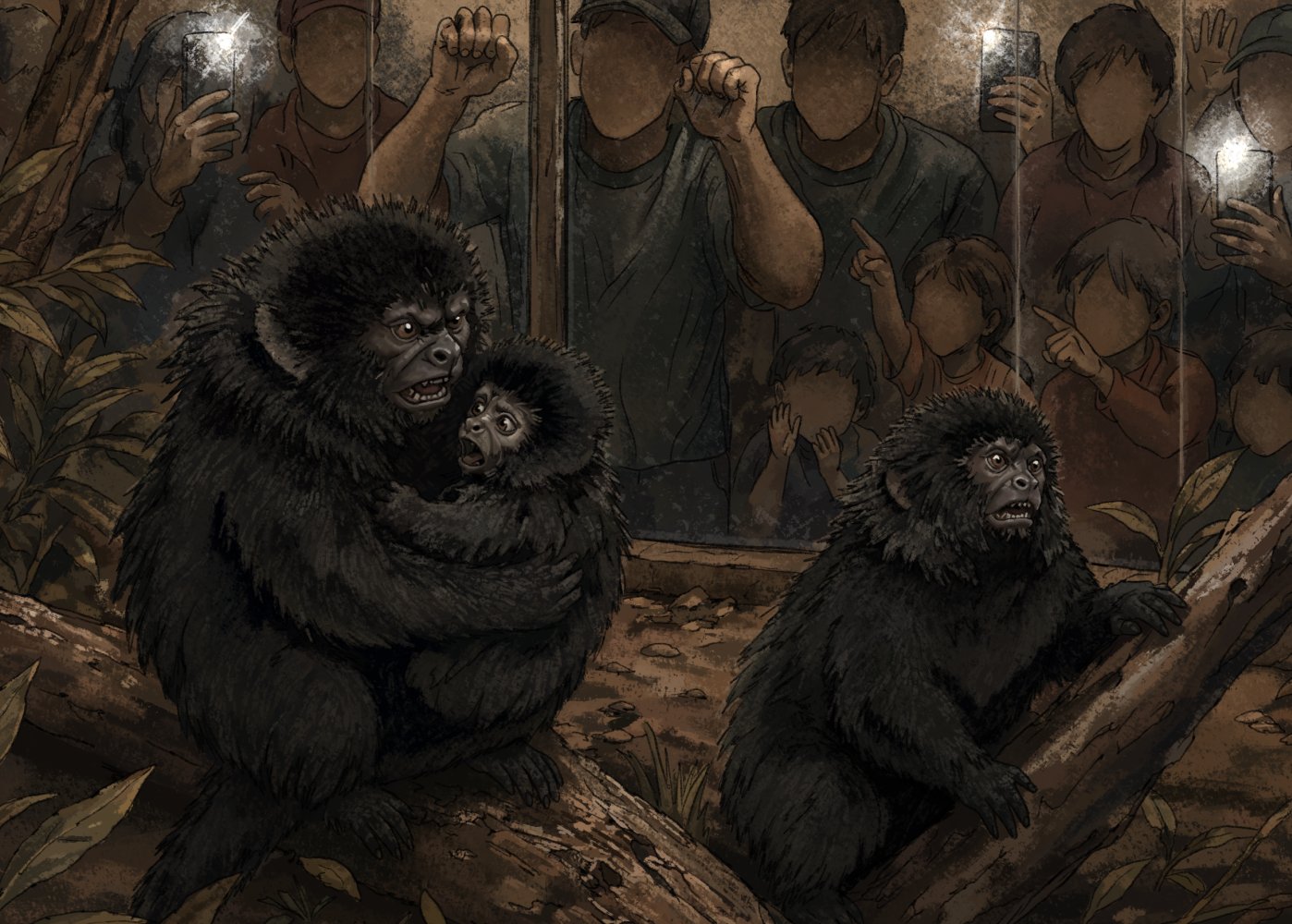
I worked with a breeding pair of Goeldi's monkeys who were housed in an incredibly loud environment where the public constantly banged on the glass. The environment was so profoundly high-stress that it completely broke the female's maternal instincts. She would repeatedly get pregnant, give birth, and then, driven by distress, eat her own babies. On a regular basis, I would walk into that enclosure to clean it and find the half-eaten remains of a newborn.
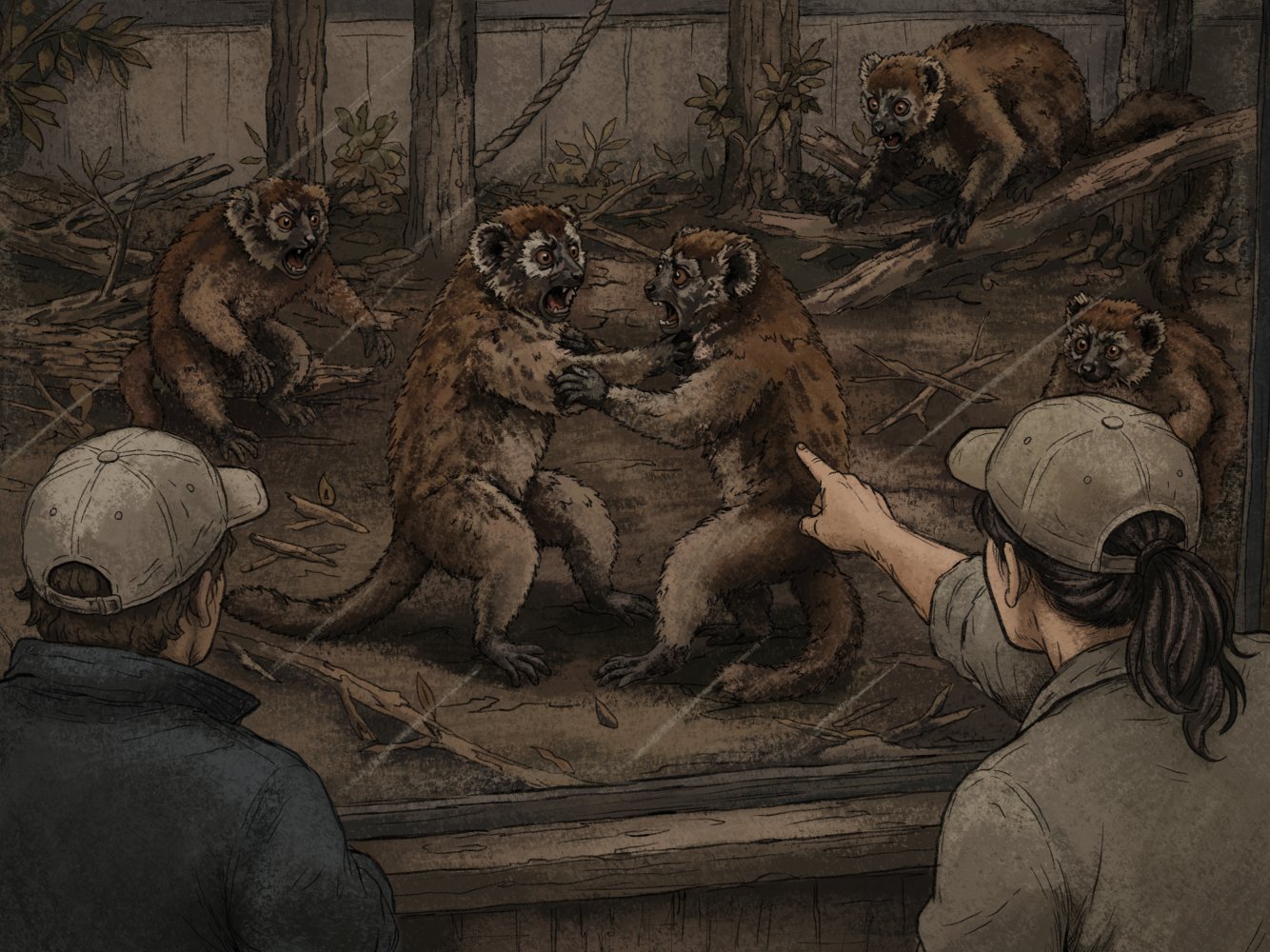
When animals are trapped together, natural social dynamics turn fatal. We housed a group of Aloatran gentle lemurs who began fighting. My colleague and I were executing a careful, gradual reintroduction protocol to reintegrate them safely. However, zoo management decided to move the group to a different section under a different team leader. Despite our explicit warnings and protocols, that team leader ignored our advice and threw the entire group into a new enclosure all at once.
In the wild, if a social group fractures, they simply separate, scatter, and start new families. In a zoo, there is nowhere to run. The next morning, keepers found one of the lemurs severely mutilated from a brutal, inescapable fight. The injuries were so catastrophic that the animal had to be euthanized. It was a tragedy born of administrative arrogance and the physical reality of a cage.
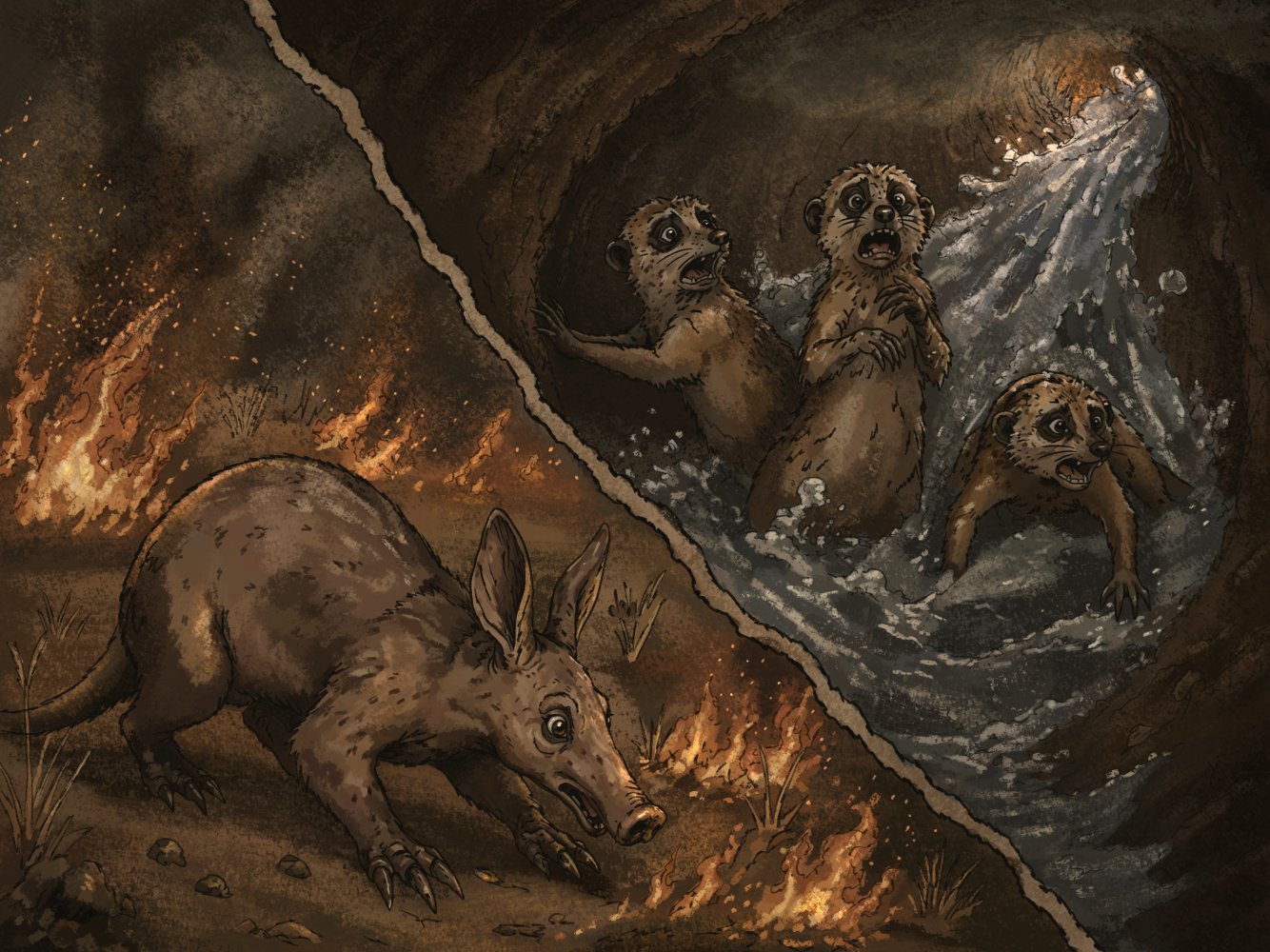
On one occasion a massive fire broke out in an enclosure housing two aardvarks and a group of meerkats whom I had loved and cared for. The enclosure was notoriously, unnaturally dry and dusty-so much so that the aardvarks frequently suffered from eye irritation that we would have to treat with daily eye drops. A low-hanging heat lamp eventually ignited the dry hay, causing a blaze that killed one of the aardvarks. In a heartbreaking twist of irony, the meerkats did exactly what their instincts told them to do to survive: they fled underground into their burrows. But when the fire brigade arrived, the sheer volume of water pumped into the enclosure to put out the fire caused those underground burrows to flood, drowning the meerkats trapped inside.
When zoos cannot manage an animal's health, often their solution is isolation. I cared for a Malayan tapir who was suspected of having TB. Though the vets could never find definitive proof, he was coughing up phlegm. To "protect the public," this large, active animal was placed into what amounted to solitary confinement-spending months on end locked entirely inside an indoor space the size of around six horse stables with nothing but an indoor pond and cut browse for enrichment.
My years in the zoo industry taught me that no matter how much some individual keepers believe they love the animals in their care, love is not robbing a being of their birthright to freedom. The institution of the zoo is fundamentally broken. Animals in zoos are subjected to unnatural climates, synthetic diets, intolerable noise, forced social groupings, and severe psychological trauma-all hidden behind a marketing campaign of "conservation."
No human needs anything at all from an animal, and animals certainly do not need to be locked away for our entertainment. It is time for the public to open their eyes to the reality behind the glass, stop buying tickets, and demand an end to the captivity industry.