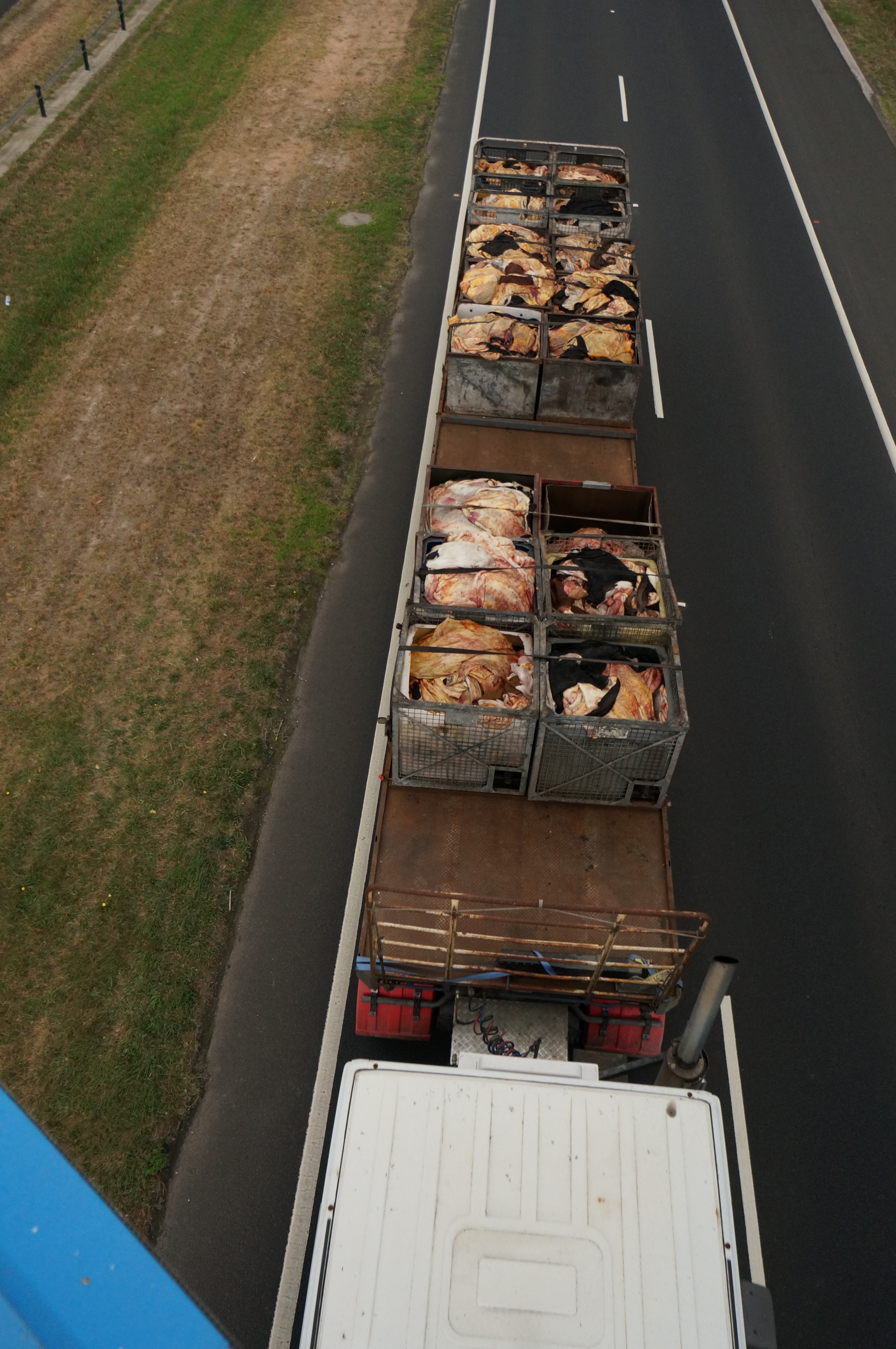
Co-product, not by-product
Leather is made from the skins ('hides') of animals, including sheep, goats, pigs, buffaloes, kangaroos, ostriches, deer, crocodiles, alligators, and many other species, but it is most commonly made from the skins of cattle, including cows, bulls, steers, and calves. Before their skin can be turned into jackets, shoes, bags, belts, and seats, they must first be killed, for both their skin and their flesh.
Leather is often incorrectly referred to as a by-product of the meat industry. However, the Meat & Livestock Australia (MLA), the Australian Hide, Skin and Leather Exporters Association (AHSLEA), and AUS-MEAT all label leather as a co-product.
Brazilian multinational company JBS is both the largest meat producer in the world ¹ ² ³ ⁴ and the largest leather producer in the world, ⁵ ⁶ ⁷ with farms, slaughterhouses, and other facilities across the globe, including in Brazil, the UK, the USA, Canada, Mexico, New Zealand, Africa, Asia, and Australia.
The "red meat and livestock industry" in Australia alone is gigantic, generating a turnover (revenue) of AUD 81.7 billion in 2022–23, followed by AUD 77.1 billion in 2023–24.
The leather and meat industries are two sides of the same kill. The meat industry profits from selling animal skins, and when those skins go unsold, their profit margins can shrink.
In 2018, Dennis King, executive officer of the Australian Hide, Skin and Leather Exporters Association (AHSLEA), stated, "The fashion industry is particularly susceptible to influence from activist groups and, in recent years, we've seen big global brands move away from using leather products in favour of synthetic alternatives".
In 2025, Beef Central reported, "There's been a gradual decline in Australian hides values for the past five years".
Beef Central explains, "Hides and other co-products contribute to the overall 'salvage' value an Australian beef processor realises when they buy a beast from a cattle producer. A lower hide price ultimately impacts on how much a processor can justify paying for a slaughter or feeder animal."
When skins ('hides') are particularly valuable, the financial incentive to slaughter increases accordingly. Siobhan O'Sullivan, Senior Lecturer in Social Policy at the University of New South Wales (UNSW), says, "There is evidence leather is driving, or at least supporting, the profitability of animal harvesting in some cases."